Recommended Sales Books: The Curated Roadmap for B2B Growth
To choose the right sales books, start by diagnosing your performance gaps, map titles to your role, compare frameworks, then plan your implementation.

Most sales leaders buy books for their teams to fix performance, but reading without a specific operational gap to fill is just entertainment, not enablement. The real starting point is not a library, but a diagnostic audit of your current pipeline. To drive predictable revenue, you must map your reading list to specific performance bottlenecks.
Start With a Performance Gap Analysis, Not a Reading List
Reading is a tool for problem solving, not a substitute for it. Before searching for recommended sales books, a leader must identify if the current bottleneck is prospecting, discovery, or closing. Assigning a book to a team that is struggling with lead quality when the actual problem is a leaky closing process creates intellectual noise without increasing the win rate.
The objective is to move from asking what is recommended to determining what is required for your current growth stage. If your AEs are struggling with deal velocity, you need frameworks for qualification. If your BDRs are failing to book meetings, you need a system for multi-channel prospecting. Applying B2B sales frameworks without a clear gap analysis is how companies end up with a shelf full of books and a pipeline full of stalled deals.
Build Your Foundation With Core Sales Methodologies
The most effective sales engines operate on a consistent « operating system » that defines how every rep interacts with a prospect. This foundation removes the reliance on individual heroics and replaces it with a repeatable process. A professional sales enablement reading list should start with the mindset that selling is serving, shifting the focus from hitting a quota to solving a client’s business problem.
Establishing the Sales Mindset
The transition to high-performance B2B sales requires a shift toward consultative selling. Books like those by Stephen R. Covey provide a broad utility beyond sales, focusing on effectiveness and priority management. When reps understand buyer psychology, they stop pitching features and start diagnosing pain. This mental shift is the prerequisite for any advanced tactical execution.
Mastering Value-Based Discovery
Discovery is where most deals are won or lost. The four-step SPIN model (Situation, Problem, Implication, Need-Payoff) developed by Neil Rackham is a research-based approach that teaches reps to uncover deep pain points. This process is essential for buyer-verified qualification, ensuring that the salesperson is not just checking boxes but co-creating a solution with the prospect.
Scale Execution With Advanced Tactical Playbooks
Once the foundation is set, the focus must shift to high-complexity sales and enterprise deal architecture. At this stage, the goal is to remove friction from the buying process and manage multiple stakeholders. Relying on hype-based content is a liability; instead, leaders should prioritize enterprise sales books that offer research-backed frameworks for navigating the political landscape of large organizations.
Navigating Complex B2B Stakeholder Maps
Enterprise deals require a sophisticated approach to qualification and control. The MEDDICC qualification methodology is a standard for ensuring that every detail of a deal (Metric, Economic Buyer, Decision Criteria, Decision Process, Identify Pain, Champion, Competition) is accounted for. Integrating a Sandler qualification process helps reps maintain frame control and avoid the common trap of chasing « phantom » opportunities.
Advanced Negotiation and Closing Frameworks
Closing is the result of a well-executed process, not a magic trick. The « Teach, Tailor, Take Control » approach from The Challenger Sale focuses on commercial teaching, where the rep challenges the buyer’s current way of thinking to create urgency. While some find this methodology hard to implement in practice, combining it with Oren Klaff’s concepts of frame control and « hot cognition » allows a rep to dominate the psychological dynamics of a high-stakes negotiation.
Compare the Top Recommended Sales Books by Role and Need
Different roles require different levers of growth. An SDR needs to master the art of the « hook » and pipeline generation, while a VP of Sales needs to systematize the entire revenue engine. The following table maps specific sales methodology books to the operational needs of your organization.
| Role | Primary Problem | Recommended Book | Core Framework |
|---|---|---|---|
| SDR / BDR | Weak Prospecting | Predictable Revenue | Specialization & Systematization |
| Account Executive | Poor Discovery | SPIN Selling | Situation, Problem, Implication, Need-Payoff |
| Sales Manager | Scaling Teams | The Sales Acceleration Formula | Data-driven Sales Management |
| VP of Sales | Complex Deals | The Challenger Sale | Commercial Teaching |
This mapping ensures that knowledge is applied where it has the highest impact on the pipeline. For example, implementing the Sales Acceleration Formula (linked to HubSpot’s growth) is a leadership move, not a rep-level tactic. It focuses on the math of the revenue engine rather than the psychology of a single call.
Determine the Right Implementation Path Before Committing
Knowledge is only valuable if it is operationalized. Most teams suffer from « shelf-ware, » where a book is read, a few notes are taken, and the sales process remains unchanged. To turn reading into revenue, you must decide how the framework will be integrated into the daily workflow of the team.
Depending on the complexity of the book and the maturity of the team, choose one of these paths:
- Self-study with a mandatory « Implementation Summary » where the rep lists three specific changes they will make to their next five discovery calls.
- Team book clubs focused on a single chapter per week, followed by a role-play session to practice the specific technique.
- Hiring a coach or consultant to audit the current pipeline against the book’s framework to identify exactly where the process is breaking down.
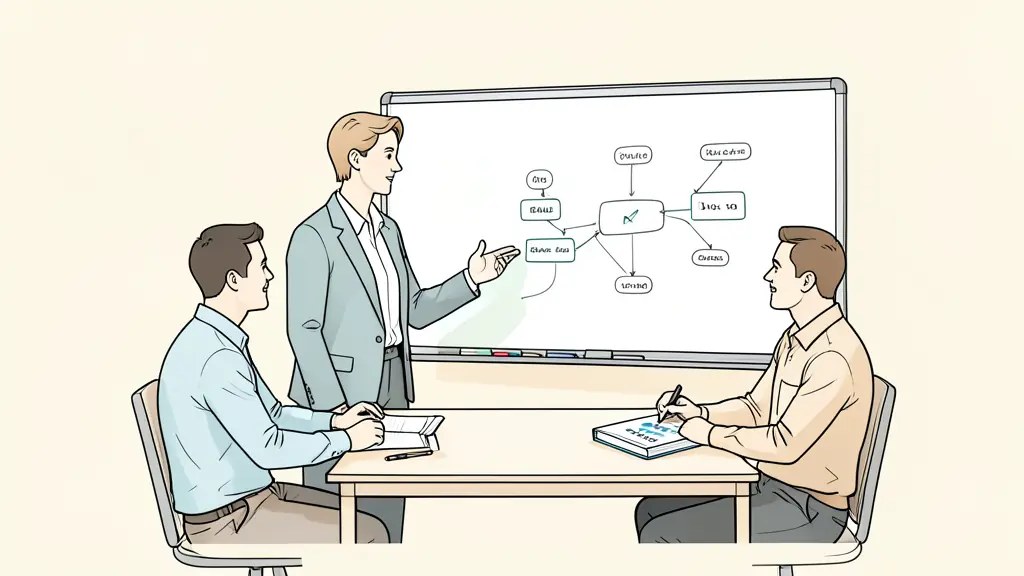
The goal is to move from theoretical understanding to behavioral change. If the team reads about the « selling is serving » philosophy but continues to use aggressive, pushy closing tactics, the exercise was a waste of time.
Audit your team’s current skill gaps before assigning a reading list. Identify the specific stage of the funnel where conversion is dropping, then match that gap to the corresponding framework. This ensures the knowledge is applied directly to the pipeline, not just archived in a notebook.
Envie d'aller plus loin ?
Laisse ton email, on te prévient dès qu'un nouvel article sort.