Different Types of Sales: The Definitive Guide to Choosing the Right Revenue Motion
To choose the right sales motion, start by defining your target market, compare the operational trade-offs of each model, then verify your resource capacity.

Most companies hire « salespeople » as a generic resource, but a great B2C rep will fail in an Enterprise SaaS environment because the system architecture, not the talent, is different. Success is not a byproduct of individual grit, but of matching the revenue motion to the product complexity and buyer behavior. When the motion is misaligned, you don’t have a talent problem: you have a systemic failure.
What Different Types of Sales Really Cover
Sales is not a transaction; it is a systemic revenue engine designed to move a prospect from a state of unawareness to a state of realized value. To build a predictable engine, you must first separate the taxonomy of growth. Many leaders confuse the target market with the delivery channel or the strategic motion, leading to fragmented CRM workflows and inconsistent forecasting.
Understanding the different types of sales requires a clear distinction between these layers. First, the target market defines who the buyer is, typically categorized as B2B sales (selling to businesses) or B2C sales (selling to individual consumers). Second, the delivery channel dictates the environment, such as whether a deal is closed remotely or via in-person field visits.
Finally, the strategic motion defines the architecture of the deal itself. This includes the level of personalization, the number of stakeholders involved, and the nature of the contract. By isolating these variables, a Chief Revenue Officer can optimize the sales funnel for specific conversion rates rather than hoping for a generic increase in volume.
How Modern Sales Models Function
Operational efficiency depends on choosing the right model for the specific buyer journey. Each model dictates the tools used, the qualification criteria, and the expected sales velocity.
B2B vs. B2C
The primary differentiator here is the decision-making unit. B2C sales are often driven by emotional triggers and shorter cycles, focusing on individual pain points. B2B sales are rational and risk-averse, involving multiple stakeholders including the economic buyer, technical evaluators, and a champion. This complexity transforms the process from a simple pitch into a multi-stage negotiation involving procurement, legal, and security approvals.
Inside vs. Outside Sales
The choice between inside sales and outside sales is a trade-off between reach and relationship depth. Inside sales leverage a digital tech stack (VoIP, video conferencing, and CRM platforms) to qualify leads and close deals remotely, maximizing the number of touches per representative. In contrast, outside sales, or field sales, rely on in-person meetings, trade shows, and physical demonstrations to build high-trust relationships. While more expensive, field sales are often necessary for high-ticket contracts where physical presence reduces buyer uncertainty.
Enterprise and SaaS
Enterprise sales are characterized by complex sales cycles and multi-cycle contracts. These deals require deep discovery to identify the need-payoff and a rigorous mapping of the decision process. SaaS sales introduce a recurring revenue model, shifting the focus from a one-time closing event to a lifecycle of onboarding, adoption, and renewal. Many SaaS organizations employ a land-and-expand strategy, starting with a small initial footprint to lower friction and using upselling and cross-selling to increase the lifetime value (LTV) over time.
To execute these motions, organizations must clearly define sales roles and responsibilities to ensure a seamless handoff from the Sales Development Representative (SDR) who qualifies the lead to the Account Executive (AE) who closes the deal.
The Real Benefits and Systemic Limits
Every revenue motion carries an inherent trade-off between acquisition cost and scalability. Direct selling provides total control over the customer experience and the feedback loop, but it often results in a higher Customer Acquisition Cost (CAC) due to the heavy investment in headcount and infrastructure.
Conversely, channel sales (indirect selling) allow for rapid geographic or vertical expansion by leveraging brokers, resellers, and distributors. While this increases reach and reduces direct payroll, it lowers margins and creates a visibility gap. When a partner manages the relationship, the company loses direct access to the customer’s pain points, which can stifle product innovation.
For high-value accounts, the enterprise sales process demands an Account-Based Selling (ABS) approach. Unlike volume-based e-commerce, where the goal is to maximize the number of conversions, ABS focuses on a small number of high-LTV targets. This requires a highly personalized strategy where marketing and sales align to treat a single account as a market of one. The systemic limit here is capacity: you cannot scale an ABS motion without a proportional increase in senior talent and resource allocation.
Comparing Sales Motions by Operational Impact
The efficiency of a SaaS sales motion is measured by its ability to balance the cost of the sale against the recurring value of the contract. High-velocity motions prioritize lead qualification and automated nurturing, while complex motions prioritize relationship equity and deep discovery.
The following table compares the operational drivers across the primary revenue motions:
| Motion | Buyer Type | Deal Size | Cycle Length | Key Skill Set |
|---|---|---|---|---|
| B2C / E-comm | Individual | Low | Short | Persuasion / UX |
| SMB SaaS | Small Biz | Mid | Mid | Process / Demo |
| Enterprise | Large Corp | High | Long | Strategy / Politics |
| Channel | Partner | Variable | Mid | Management |
The data shows that as deal size increases, the required skill set shifts from transactional persuasion to strategic orchestration. In an enterprise environment, the ability to navigate a complex decision-making unit is more valuable than the ability to deliver a polished product demonstration.
Determining Which Sales Model Suits Your Growth Stage
Selecting a motion is not a matter of preference, but of mathematical alignment. If your product requires a complex implementation and involves five or more stakeholders, an inside sales model will likely lead to a « leaky bucket » where deals stall because the representative cannot navigate the internal politics of the prospect’s organization.
Before pivoting your motion or hiring a new sales head, audit these three criteria:
1. Resource Availability: Do you have the budget for the high CAC associated with field sales, or does the current LTV demand a low-cost remote model?
2. Buyer Sophistication: Does the customer know they have a problem (Inbound), or do you need to use insight selling to create the need (Outbound)?
3. Required Touchpoints: Does the product require a guided trial, a complex security review, or a simple sign-up flow?
If the goal is rapid market penetration with minimal overhead, channel selling may be the most viable path, provided you have the infrastructure to enable partners. However, if the product is a category-creator, direct consultative selling is necessary to educate the market and build the initial case studies.
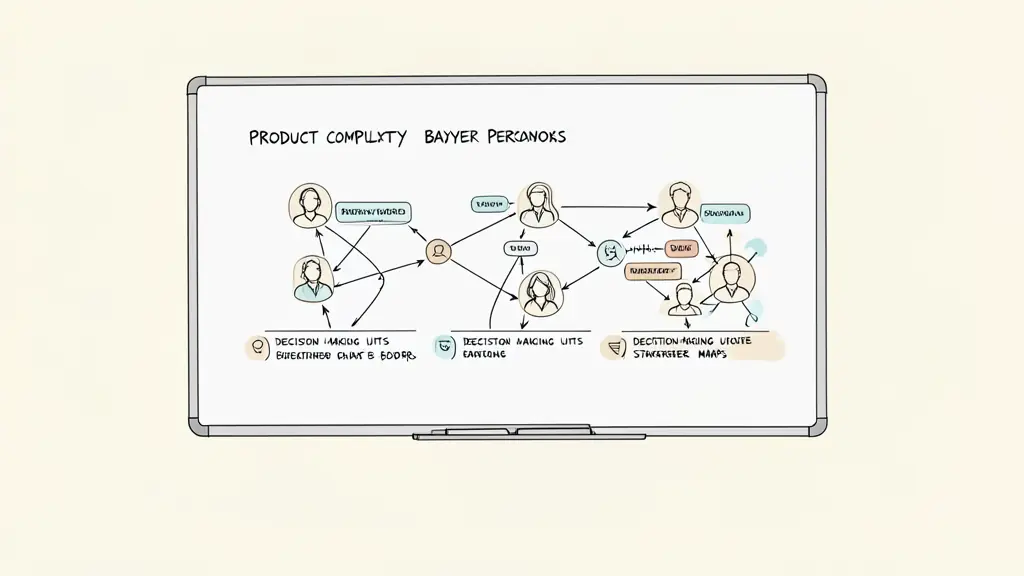
The correct alignment ensures that the sales team is not fighting the system, but is supported by it. When the motion matches the market, revenue becomes a predictable outcome of the architecture.
The right question is not « Which sales model is the best? » but « Which motion does my current product complexity demand from my ideal customer profile? »
Envie d'aller plus loin ?
Laisse ton email, on te prévient dès qu'un nouvel article sort.